
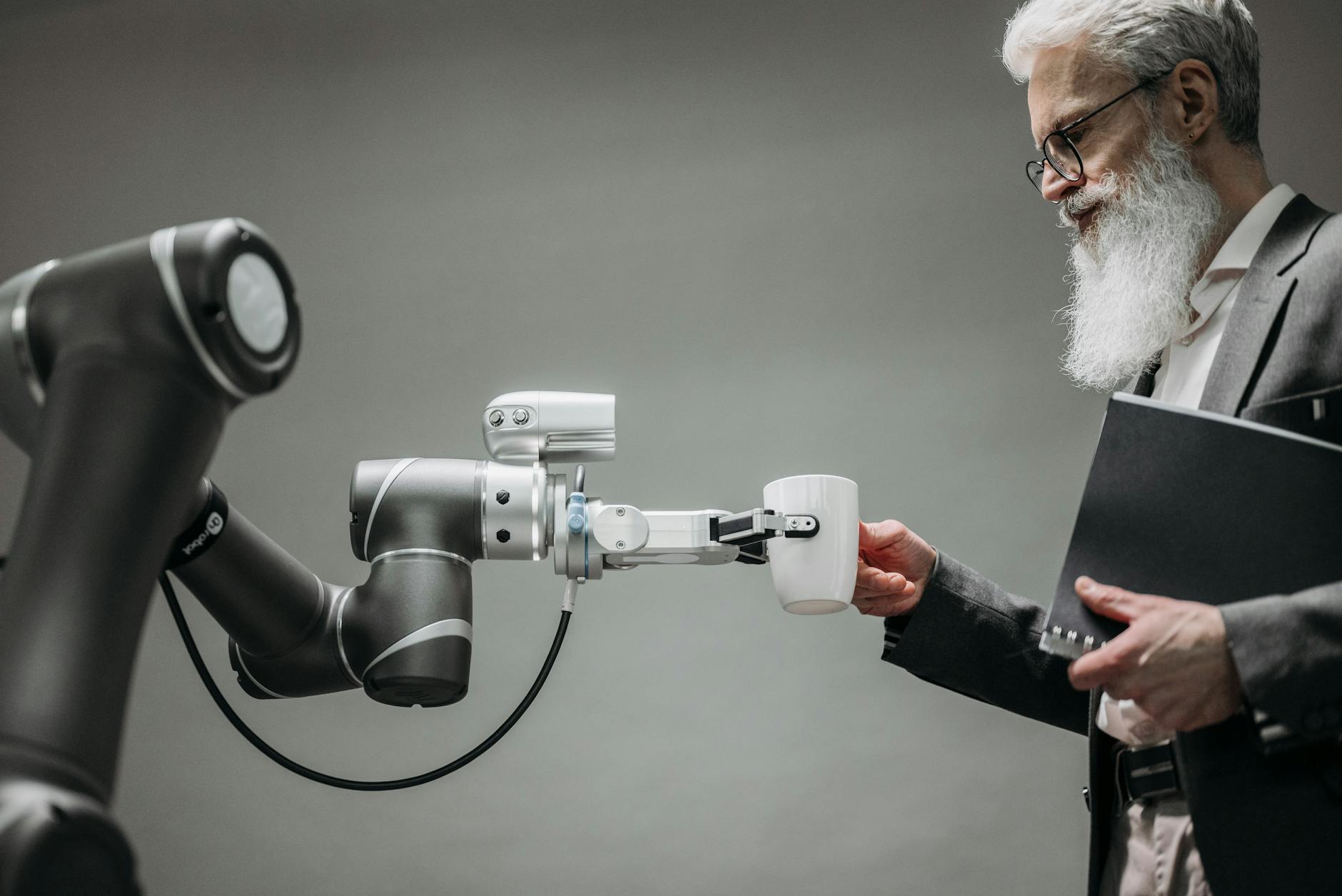
Como a Inteligência Artificial Está Transformando o Mercado de Trabalho
Explore as mudanças que a Inteligência Artificial está trazendo para o mercado de trabalho e como se preparar para as novas oportunidades.
Principais Conclusões
- A IA está criando novas funções e oportunidades de carreira.
- A automação pode substituir alguns empregos, mas também gerará novas especializações.
- Preparar-se para o futuro requer atualização constante e habilidades em tecnologia.
The Transformative Power of Artificial Intelligence
As we step into 2027, we stand on the brink of a revolutionary era where Artificial Intelligence (AI) is not just a tool but a fundamental force reshaping the fabric of society, industries, and daily life. The continuous evolution of generative AI, remote global work, and immersive learning experiences are redefining the way we operate, learn, and interact. In this article, we'll explore the transformative potential of AI and how it is influencing various sectors by examining current trends and innovations.
The Current State of AI
The advancements in AI technologies over the past few years have been nothing short of astounding. By 2026-2027, key developments include:
-
Generative AI: Technology capable of creating content, from text to images and music, has become even more sophisticated. Platforms like OpenAI's ChatGPT and DALL-E have evolved to understand context and user intent better than ever before.
-
Neuromorphic Computing: This innovative computing paradigm is mimicking human brain functions and significantly improving AI's problem-solving capabilities.
-
AI Ethics and Regulation: As AI's capabilities expand, so do discussions surrounding ethical implications and regulatory frameworks to ensure responsible use.
Impact on Industries
1. Education
The landscape of education has seen radical transformation with AI-driven platforms offering customized learning experiences. Key highlights include:
-
Immersive Learning Environments: Virtual and augmented reality (VR/AR) technologies are integrated with AI to create engaging, interactive learning experiences.
-
Personalized Tutoring: AI analyzes student performance in real-time, providing tailored resources and feedback to enhance learning outcomes.
2. Healthcare
AI's impact on healthcare is profound, optimizing processes and improving patient care. Key developments include:
-
Predictive Analytics: Utilizing historical data to predict disease outbreaks and treatment outcomes, supporting proactive healthcare measures.
-
Robotic Surgery: Enhanced precision and reduced recovery times through AI-assisted surgical procedures.
3. Employment and Remote Work
With the emergence of a global remote working culture, AI has played a crucial role in facilitating this transition:
-
Virtual Collaboration Tools: Enhanced AI-driven tools enable seamless communication and project management in diverse teams.
-
Job Automation and Creation: While AI may automate routine tasks, it simultaneously creates new job opportunities requiring higher levels of creativity and problem-solving skills.
| Industry | AI Impact |
|---|---|
| Education | Personalized learning, VR/AR tools |
| Healthcare | Predictive analytics, robotic surgery |
| Employment | Virtual collaboration, job evolution |
For more information on the latest trends in AI and their applications, check out McKinsey & Company and Gartner.
Challenges Ahead
Despite its numerous benefits, the rapid deployment of AI brings inherent challenges, including:
-
Data Privacy Concerns: Ensuring the security and privacy of user data in AI systems remains a critical issue.
-
Job Displacement: Balancing automation and workforce needs requires strategic alignment between businesses and policymakers.
FAQ
1. How can businesses effectively implement AI technologies?
Businesses should start with a clear strategy, identifying specific areas of improvement and selecting AI tools that align with their goals. Training employees and ensuring ethical use are also crucial.
2. What are the skills needed for the future job market influenced by AI?
Skills in data analysis, critical thinking, creativity, and emotional intelligence will be increasingly valuable in a job market shaped by AI technologies.
3. How is AI transforming customer service?
AI-driven chatbots and automated support systems enable 24/7 customer service, offering quick resolution to inquiries and improving overall customer satisfaction.
Conclusion
As we navigate the transformative waves of AI advancements in 2026-2027, it is clear that the integration of AI into various sectors opens up unprecedented opportunities while posing significant challenges. Our ability to adapt and innovate amidst these changes will determine the future trajectory of society as a whole.
If you're eager to harness the power of AI for personal or professional growth, explore our Courses designed to equip you with the skills needed for this new era. Take the first step towards revolutionizing your understanding of AI today!
Quer aprender a criar plataformas como esta?
Junte-se à Imersão Completa e domine o desenvolvimento web, apps e IA.
Começar a Imersão